Laminate Countertops
Laminate Countertops > About Us
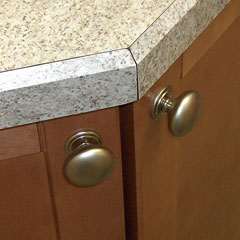 One of the most frequently-used countertop surface materials is
plastic laminate. Plastic laminate surfaces are durable, affordable,
and available in a wide variety of patterns and colors.
One of the most frequently-used countertop surface materials is
plastic laminate. Plastic laminate surfaces are durable, affordable,
and available in a wide variety of patterns and colors.
After the Formica Corporation was founded in 1913, plastic laminate was used mainly in the electrical industry as an insulator, in cars and radios, and then later for furniture. After 1927, when a method of lithographing designs on the surface was developed, laminate became popular for use as restaurant and bar countertops. Until that time, laminate was only available in black or brown. But with the new decorative designs marketed after World War II, builders began to use it in the home market. Today, if you want a real retro look for your kitchen countertops, use the earlier classic plastic laminate designs. Add a chrome edge and voila — retro 1950s!
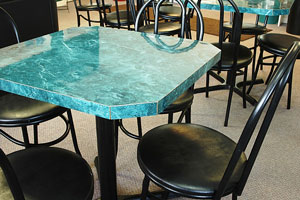 Plastic laminate is made by bonding together melamine, paper, and
plastic resin layers, using a high temperature and pressure process.
The finished laminate is then bonded to a plywood or particleboard base
to form the countertop. The laminate can even be contoured to match
the countertop shape. The resulting surface material resists water,
stains, and some abrasion. But it can be scratched or chipped by
sharp objects, and damaged or scorched by hot pots and pans. Damage
to plastic laminate materials cannot be repaired. Damage will not
show so much on the solid-core laminates, and maybe you can just live with
it; but to fully fix a laminate countertop, replacement is the only
option. Use cutting boards and trivets to protect this countertop
material.
Plastic laminate is made by bonding together melamine, paper, and
plastic resin layers, using a high temperature and pressure process.
The finished laminate is then bonded to a plywood or particleboard base
to form the countertop. The laminate can even be contoured to match
the countertop shape. The resulting surface material resists water,
stains, and some abrasion. But it can be scratched or chipped by
sharp objects, and damaged or scorched by hot pots and pans. Damage
to plastic laminate materials cannot be repaired. Damage will not
show so much on the solid-core laminates, and maybe you can just live with
it; but to fully fix a laminate countertop, replacement is the only
option. Use cutting boards and trivets to protect this countertop
material.
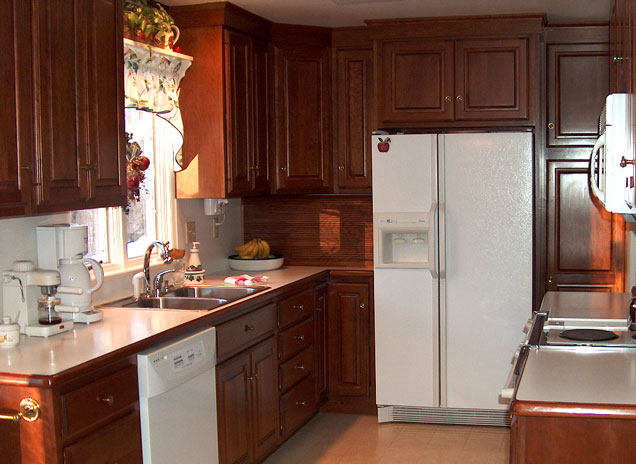 Laminate Countertops with Wood Edges
Laminate countertops are durable and easy to clean. Wash them with mild detergent and water, then rinse with a clean cloth. Do not use abrasive cleaners. Wipe up spills quickly so liquids can't seep under any seams where the laminate edges meet. If the underlayment gets wet, it can warp and swell, ruining the smooth countertop.
New plastic laminate countertops are an economical way to add beauty and value to your home. Visit the manufacturer websites listed below to view all the wonderful options available.
Laminate Countertop Material Manufacturers
- Formica
Formica Corporation designs and manufactures a variety of surfacing materials.
www.Formica.com - Wilsonart
Wilsonart produces decorative laminate and solid surface materials.
www.Wilsonart.com - Nevamar
Nevamar is a brand of decorative laminates and specialty laminates.
Panolam.com/nevamar/ - Pionite
Designs and produces high-quality, durable custom laminates.
Panolam.com/pionite/ - AbetLaminati
Manufacturer of high pressure laminates. Offers a wide range of solid-color laminates, as well as various laminates that mimick wood, metal, stone, and other decorative effects.
AbetLaminati.com
Related Countertop Page
- Countertop Materials reviews the characteristics of popular kitchen counter materials.
Wilsonart is a registered trademark of Wilsonart International.
Nevamar is a trademark of the Nevamar Company.